
On July 13, four birders met co-leaders Kathy Madison and Steve Garman for what has become a favorite Audubon field trip to Wigwam Creek, a small stream near Cheesman Canyon in southwestern Jefferson County. The Hayman Fire burned this area in 2002, and as a result, numerous snags dominate the landscape—prime habitat for Lewis’s and Red-headed Woodpeckers. Unfortunately, the area offers little shade, and the unrelenting heat made some participants rethink if a trip to Water World would have been a better choice.
Participants gathered at the parking lot for Cheesman Canyon—a popular access to the South Platte River where anglers can test their skills on persnickety rainbow and brown trout. Often having to fight for a spot due to its popularity, we were astonished to find the lot only half full. Was it because of low flows during the drought? No, the river was flowing at a prime 256 cfs. Perhaps it was due to being a Monday after the onslaught of the weekend. Ron Belak and Steve waxed poetically on their successful fishing there in the past, but they were quickly hurried along by other nonangling participants to willow habitat at the west end of the lot. There sat a Harley, and at its tires lay its owner completely cocooned in a heavy woolen blanket. No part of the human anatomy was exposed, but a well-timed snore prevented us from nudging the wrap in search of life. Perhaps it was his Wigwam.
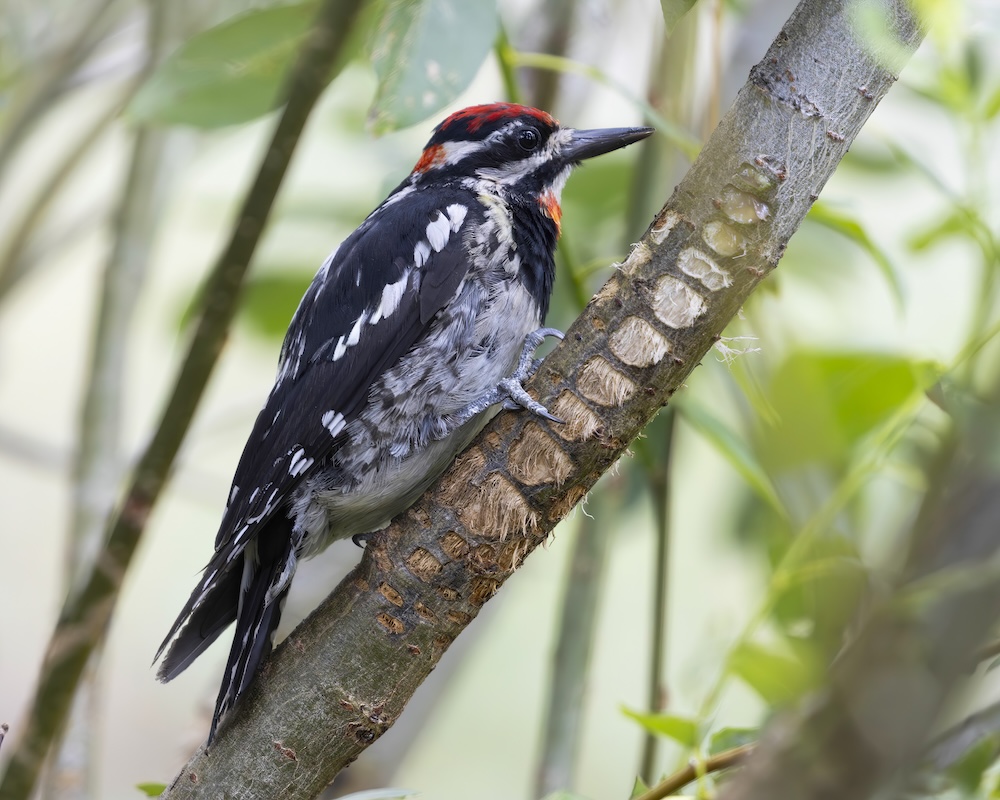
The riparian habitat near the parking lot never disappoints. In addition to the usual forest suspects, such as Pine Siskins, Red Crossbills, Pygmy Nuthatches, Mountain Chickadees, Western Wood-Pewees, Western Tanagers and Warbling Vireos, the willows and brush offered MacGillivray’s Warblers, Northern Yellow Warblers, an American Goldfinch and Song Sparrows. Then a “woodpecker” appeared high in the trees. Ron offered an identification of Downy Woodpecker, but Roger Fillion quickly pointed out its larger silhouette. Participants could not agree on characteristics, so apps and books flew open, and we hurriedly thumbed through pictures looking for a match. Then Rachel Hutchison offered the possibility of two different species. Yes indeed, a Williamson’s Sapsucker and a Red-naped Sapsucker vied for our attention. This, of course, proved that two birds in the tree are better than one in the bush. Returning to the parking lot in the 80-degree heat, the cocooned motorcyclist was still firmly and completely wrapped, snoring away.
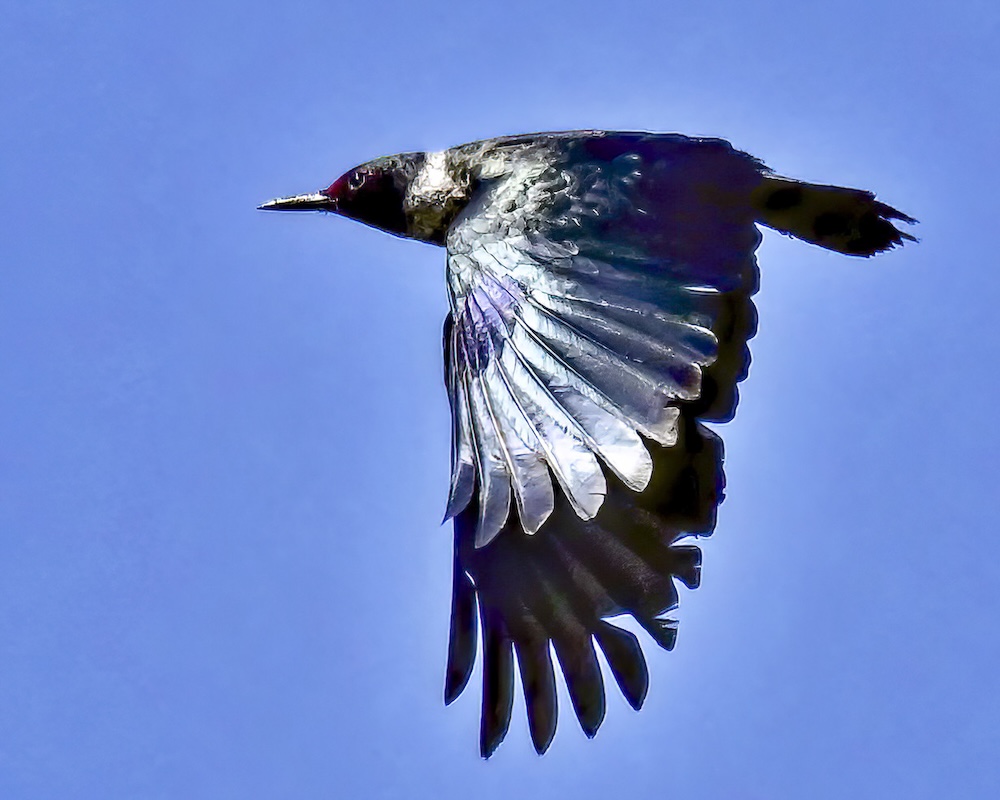
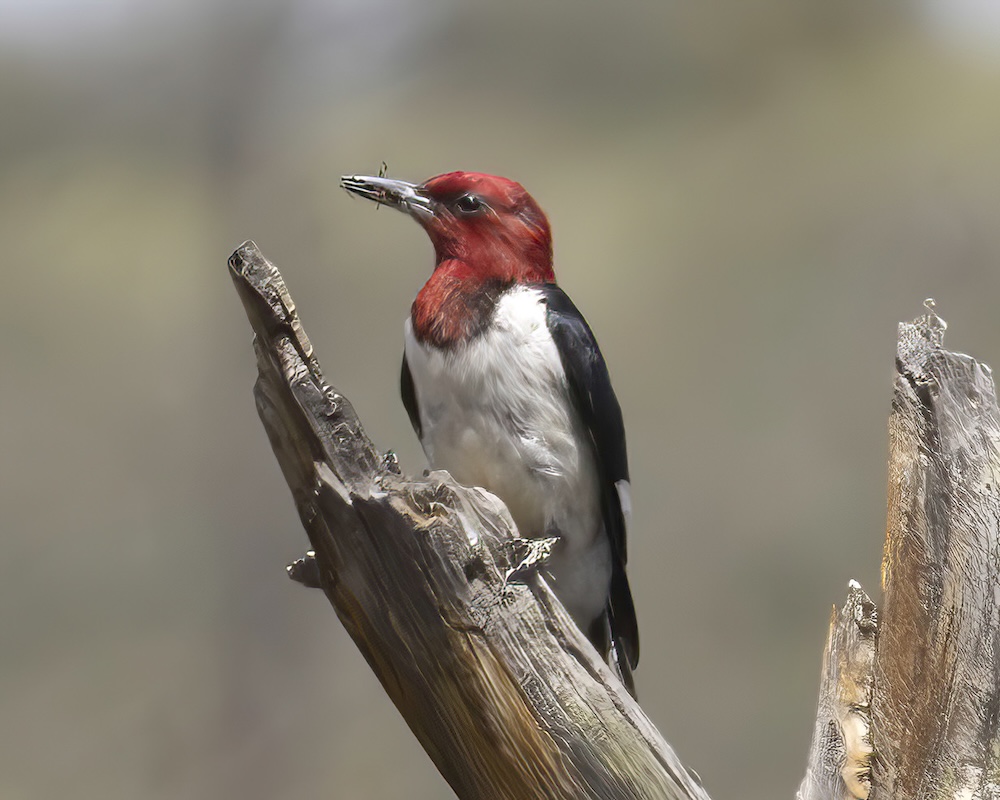
Participants then ventured up Wigwam Creek Road to a pullout where Ron suggested we could find Rock Wrens. Right on cue, two appeared. Farther up the road, Steve suggested stopping in a pullout for Olive-sided Flycatchers, but we failed to hear their characteristic call for a “quick three beers.” There would be no “beer” until later in the trip when not only did we hear this call but learned of a less distinctive call, courtesy of the Merlin app. A brightly colored bird flew by and then briefly landed on a distant snag. Ron suggested an American Kestrel, but others observed that it appeared less colorful when backlit or seen from different angles. We settled on a Peregrine Falcon but were proven wrong after the trip. Peter Monson’s picture captured the bird in flight and sealed the identification of American Kestrel. Lighting, distance and the natural progression of the burned area limited photographic opportunities for Red-headed and Lewis’s woodpeckers. Many snags have fallen over the last few years, creating less habitat and fewer individuals.
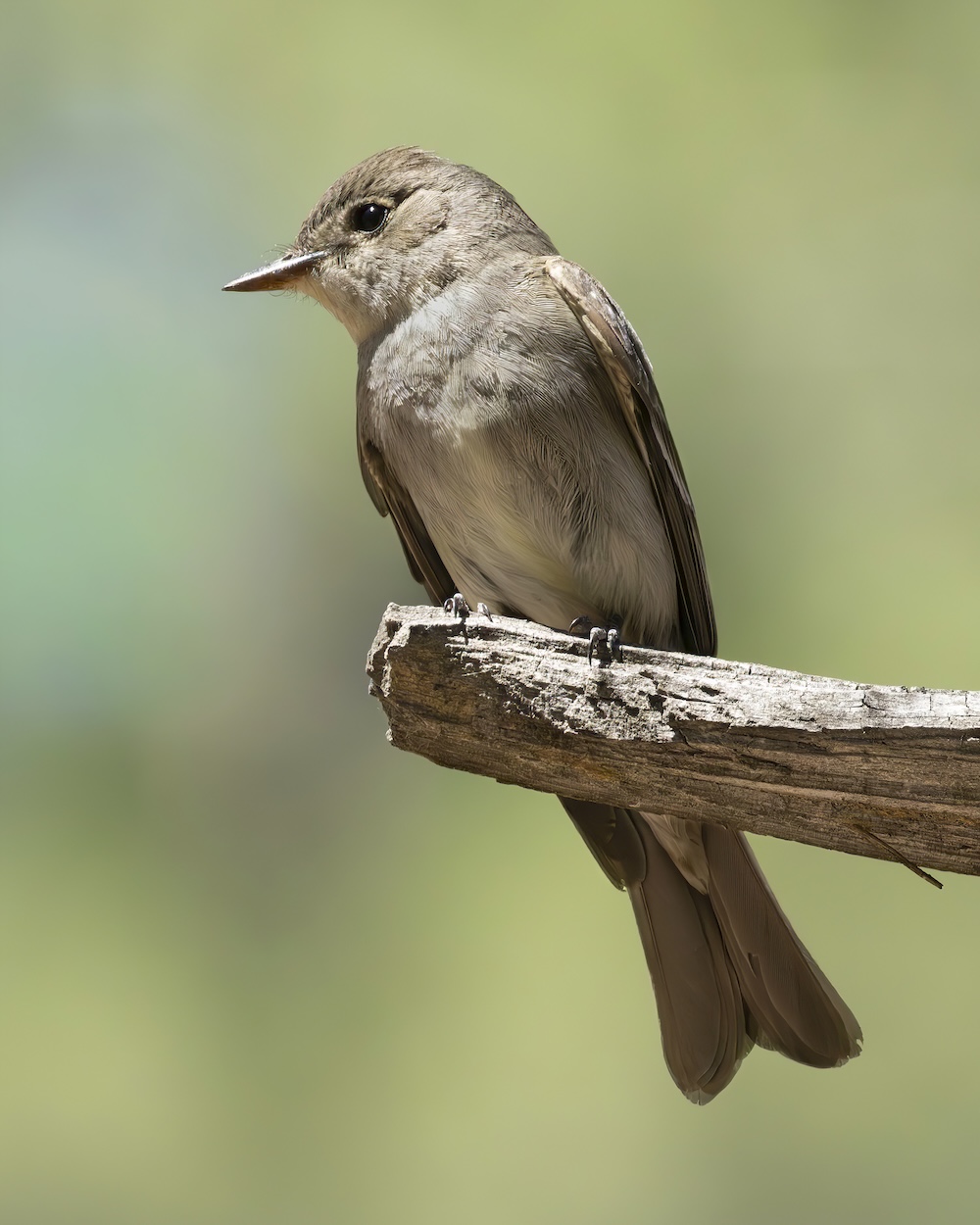
Moving into the riparian area surrounding a popular camping spot produced well-earned shade and numerous fly catchers. Riparian areas, being wet, are often saved from being torched by a passing wildfire. Merlin identified the songs of four Western Wood-Pewees, three Western Flycatchers, two Hammond’s Flycatchers, and a Say’s Phoebee in a pine tree. Of course, when these somewhat similar-looking birds exposed themselves, they all clammed up, making identification a visual exercise. Kathy sorted all this out with expert use of Merlin and noting distinguishing characteristics, such as wing bars and eye rings. We also enjoyed appearances in the trees of our Evergreen friends, the Pygmy and White-breasted nuthatches and a Steller’s Jay. On the drive home, we were treated to five Wild Turkeys on the banks of the South Platte River.
There were lessons to be learned (or perhaps reinforced) on this trip. As most of us know, Merlin is not always correct but can often identify a bird that we might overlook in the cacophony of songs and calls, particularly when dense vegetation hides the little buggers. Merlin is also limited by the phone’s speaker; some of us can hear well beyond the range of our phones. Birds can look different, depending on the angle and intensity of light. This can be compounded by our minds filling in details, including color, that we really are not seeing (perceptual completion), especially when we only get a quick glance. Paying attention to the silhouette of the bird, its behavior and flight can often help significantly when colors are not obvious. Another lesson is to go birding with other birders. More eyes see more birds, more and better ears hear more birds, and more experienced birders help with identification. This is why Evergreen Audubon organizes these trips. And lastly, going birding when it’s warm outside helps you recognize newly met birders when you see them again without the wool caps, concealing hoods and dark sunglasses worn on frigid, early season outings. However, as our sleeping motorcyclist demonstrated, one’s attire during warmer weather does not always help.
List of Wigwam Birds, July 13, 2026 (photographs all taken in the Wigwam Creek area)
6 participants, 36 bird species. Thanks to Roger Fillion for tabulating the birds.
Broad-tailed Hummingbird 1
Williamson’s Sapsucker 1
Red-naped Sapsucker 1
Northern Flicker 2
Western Wood-Pewee 4
Western Flycatcher 2
Hammond’s Flycatcher 1
Say’s Phoebe 2
Plumbeous Vireo 1
Western Warbling Vireo 1
American Crow 5
Mountain Chickadee 1
Violet Green Swallow 4
White-breasted Nuthatch 2
Pygmy Nuthatch 4
American Robin 5
Pine Siskin 4
American Goldfinch 1
Dark-eyed Junco 1
Song Sparrow 4
MacGillivray’s Warbler 1
Northern Yellow Warbler 2
Western Tanager 6
Red Crossbill 2
Belted Kingfisher 1
Lewis’s Woodpecker 1
Red-headed Woodpecker 1
Brown Trout 3 (in Wigwam Creek)
American Kestrel 1
Olive-sided Flycatcher 4
Steller’s Jay 1
Black-capped Chickadee 1
Rock Wren 2
Canyon Wren 1
Western Bluebird 1
Mountain Bluebird 1
Chipping Sparrow 1
Yellow-rumped Warbler 1
Lazuli Bunting 1